Prices as listed by En Route.
The retailer’s price may differ.
Bookstores, parishes, and schools:
Order direct at a discount.
- Subject
- Philosophy
- Formats
- Paperback, Kindle
- ISBN
- 9781956715217
- Publisher
- En Route Books and Media
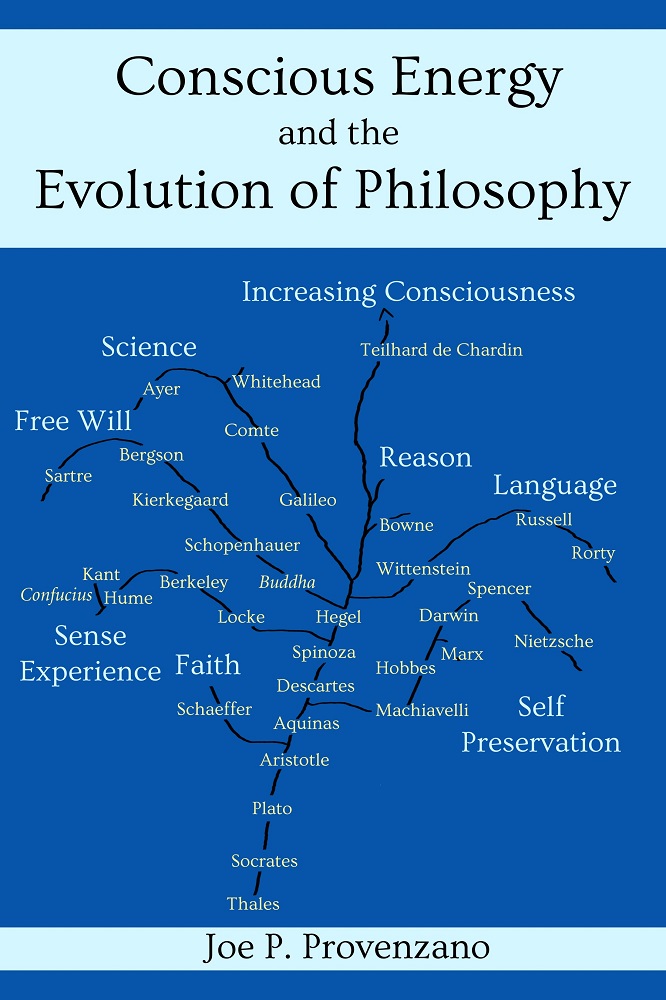
Conscious Energy and the Evolution of Philosophy
This is a book about philosophy, but it is a book for everyone—everyone who has ever wondered about the meaning of the universe and human life—because it provides answers to two fundamental questions: What is it all about? and How should we live?
Praise
“The Philosophy of Conscious Energy provides a way to understand how an immortal soul, as understood by Scripture and theology, could emerge through an evolutionary process. That’s because it is a process of increasing consciousness and complexity guided by God, who is the author of the Law of Consciousness and Complexity.”
“Provenzano has written an interesting and thought-provoking book on a fascinating part of philosophy, namely consciousness. I benefited greatly from his summary and categorization of the main philosophers in history which comprises the first half of the book.”
“[Provenzano] provides an immediately understandable portrayal of the key concepts of Teilhard’s thought and of its implications. This summary is without doubt the clearest that I have read on Teilhard.”
“According to Provenzano, ‘What is it all about?’ and ‘How should we live?’ are the ‘Two Big Questions’ philosophy should answer if it is to benefit the human race…Conscious Energy is a challenging and thought-provoking work that once again places ‘The Two Big Questions’ at the center of philosophical inquiry.”
“What a wonderful book this philosophy of Conscious Energy is! An uncle gave me a copy a good few years ago, and reading it had a profound effect on me. I have been interested in Teilhard’s thought for years, and this book really clarified & crystallised his concepts for me. I love the fact that Provenzano is humble enough to encourage his readers to ask their own questions and to seek their own answers using this philosophy of conscious energy. I often revisit the book, and as time goes on, I am more and more grateful for it. I see the truth of it in the world & in my life more deeply as I get older. It has given me a framework for my personal & spiritual growth, and a way of making sense of life.”
About the Author
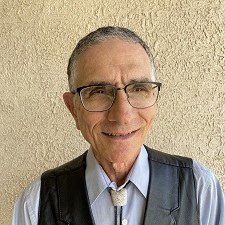
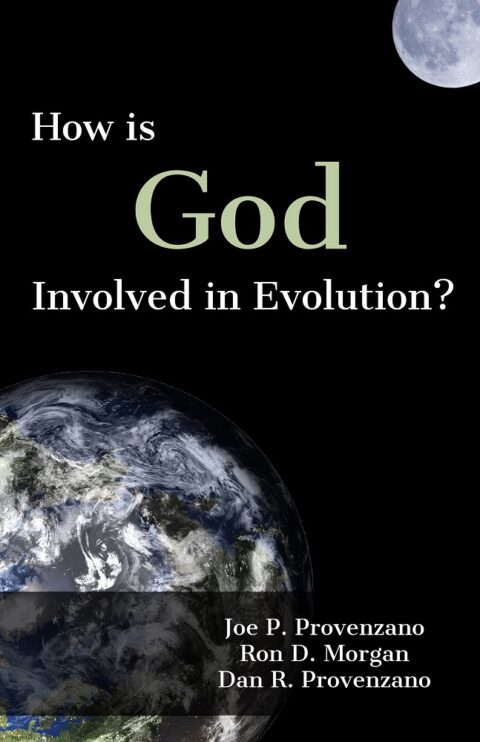
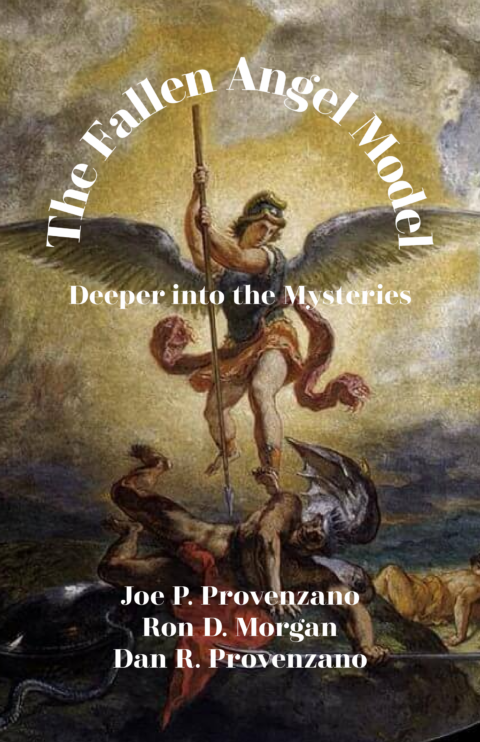
Joe Provenzano has an M.S. in physics. He has spent much of his life studying the great philosophical thinkers and the tough philosophical and theological questions. Joe also authored How to Believe in God and Science — In Three Easy Steps and co-authored The Fallen Angel Model — Deeper into the Mysteries with Deacon Ron D. Morgan and Dan R. Provenzano (Joe’s son) who has a Ph.D. in physics. Joe may be reached at [email protected]
Reviews
- Conscious Energy, The Fallen Angel Model, and the Catholic Church by Joe Provenzano, Dcn. Ron Morgan, and Dan Provenzano (January 2022)
- Book Review of the 1st Edition, The Teilhard Review by Tom Baxter (Autumn, 1993)
- “The Philosophy of Conscious Energy: Answers to the Ultimate Questions” by Joseph (Joe) P. Provenzano
- First Edition, Published in 1993
- Five Star Book Review by Tasshin Fogleman
- Author of 3 books with 61 followers in Goodreads
- January 26, 2013
- This strange book was given to my college’s library by Mortimer Adler, and that was enough to make me overcome my initial reaction—weird cover, weird premise!—and check the book out. When I started reading it, I was enthralled, and when I had to stop at the end of a sitting, I couldn’t wait to get back to finish the book.
- Provenzano is an amateur or layman philosopher, and his thesis is that Pierre Teilhard de Chardin has helped us to finally answer philosophy’s two big questions—What is this universe, and how should we live in it?
- Provenzano gives criteria for a successful philosophy at the beginning of the book, summarizes many of the world’s major philosophies in a coherent order, and then proceeds to show why Chardin’s philosophy is the most satisfactory or successful philosophy, while subsuming all of the successful aspects of previous philosophies as secondary insights.
- This book makes me think that Plato’s claims in the Phaedrus and the Seventh Letter that “there is an argument which holds good against the man ventures to put anything whatever into writing on questions of this nature.” Provenzano’s insistence on using clear prose and straight-forward thinking about these questions in writing is a courageous attempt to transcend this kind of philosophical skepticism, and a breath of fresh air after a lot of esoteric argumentation from other thinkers. I’ll be thinking about the conclusions in this book for some time, and the way in which Provenzano pulled it off. I recommend this book highly to any open-minded reader who likes books that whack you out of any existential slump right back into this beautiful world.