Prices as listed by En Route.
The retailer’s price may differ.
Bookstores, parishes, and schools:
Order direct at a discount.
- Subject
- Faith and Morals
- Formats
- Paperback, Kindle, Audible
- ISBN
- 9781956715507
- Publisher
- En Route Books and Media
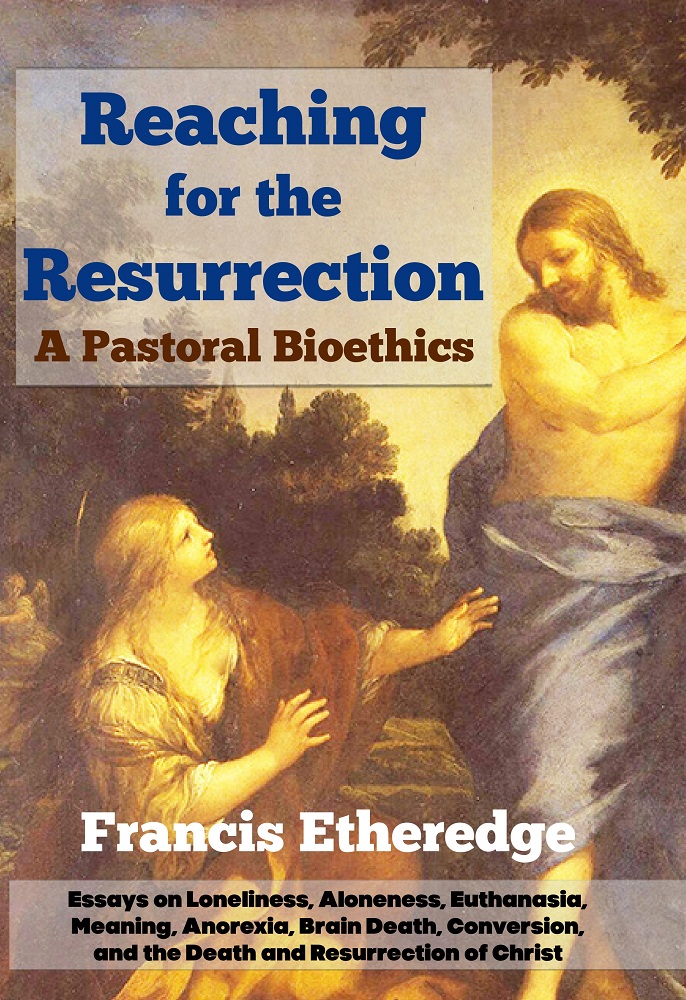
Reaching for the Resurrection
A Pastoral Bioethics
Loneliness, Aloneness, Euthanasia, Meaning, Anorexia, Brain Death, Conversion, and the Death and Resurrection of Christ
Francis Etheredge returns to the subject of bioethics with essays on loneliness, aloneness, euthanasia, meaning, anorexia and purpose, brain death and the life and death of Jesus Christ. Why? Because man, male and female, one in body and soul, suffers as a religious being. To be able, therefore, to respond mercifully and constructively to a variety of human wounds, opening up, again and again, the possibilities of life, we need to recognize that the whole of human personhood entails being-in-relationship: that man is a social being and exists in relation to God and neighbor: the God who comes to show us the truth-in-love that heals and calls us to share what we have received with our neighbor.
Praise
“Suffering, often coupled with loneliness, can lead people onto destructive, even fatal paths. While this is well known, the religio-spiritual element is commonly negated in bioethical discourse. Arguing from the basis that every person is a religious being, Francis Etheredge in Reaching for the Resurrection: A Pastoral Bioethics offers his first-hand experiences of suffering and loneliness as a source for reflection. He describes an ‘ontological death’ that occurs when meaning and desire to live are lost. Yet, this need not be the end. As was the case for Etheredge, the Paschal mystery – Christ’s passion, death, and resurrection – not only provides hope amid suffering but indeed participation in God’s very own life. Replete with personal testimony, Reaching for the Resurrection presents a concise counternarrative to today’s secular and increasingly nihilistic approach to bioethical challenges.”
“In Reaching for the Resurrection, Francis Etheredge shines light on the darkness of today’s materialist assumptions that lead to loneliness, anorexia, suicide, abortion, and euthanasia. For when we reach for the resurrection of Christ, we are resurrected, made anew, in this life and the next. We see that our Creator can re-create us, re-form us, redeem us, giving our lives meaning and purpose, ‘life to the full.’ We see that faith and reason inform one another. Profound and practical, using personal testimony. Highly recommended for pastors as well as those desiring a deeper understanding of who we are and are meant to be, created by the God of love, in His image.”
“This book offers a novel approach to bioethical topics by including pastoral questions and theological insights.”
“It’s terrific! Brilliant! Love it! Fresh insights into the worst problems of our times! What a glorious story and book. I love it. I want to give it to someone in despair!”
About the Author
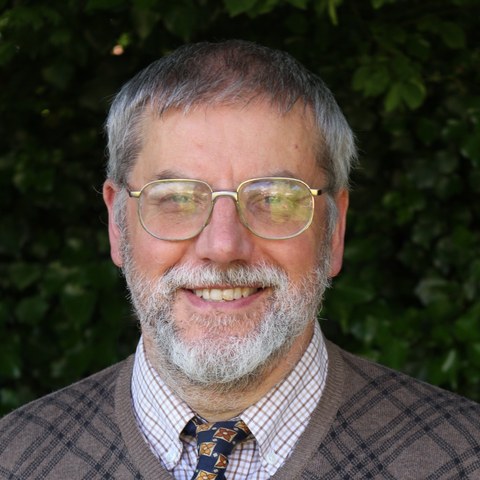
Mr. Francis Etheredge is married with eight children, plus three in heaven.
Francis is currently a freelance writer and speaker and his “Posts” on LinkedIn can be viewed here. Poetry; short articles; autobiographical blog; excerpts from books; and “Philosophize: A Ten Minute Write.”
For a list of all of Francis’ books published by En Route Books and Media, click here.
See Francis’ other books, too, entitled Scripture: A Unique Word, From Truth and truth: Volume I-Faithful Reason, From Truth and truth: Volume II: Faith and Reason in Dialogue, From Truth and truth: Volume III: Faith is Married Reason.
He has earned a BA Div (Hons), MA in Catholic Theology, PGC in Biblical Studies, PGC in Higher Education, and an MA in Marriage and Family (Distinction).
Enjoy these additional articles by Francis Etheredge:
Reviews
- “Life Lived Fully,” a Review of Reaching for the Resurrection: A Pastoral Bioethics by Christine Sunderland, Catholic author. To read the review, click here.
- Pravin Thevathasan, editor Catholic Medical Quarterly [click here for the review on CMQ]
- In the last few years, I have enjoyed reading the works of Francis Etheredge. He has the ability to communicate bioethical truths in a way that is interesting and easy to follow. This book is no exception.
- For Christians, our bioethical reflections need to take place in the light of the Resurrection, says the author. Even in our deepest suffering, the Risen Christ is with us. It is Christ in his Sacred Passion who heralds his Resurrection. Our sufferings when united with those of Christ brings meaning to our afflictions. The author reflects on his own sufferings. It was the Holy Face of Jesus that brought meaning to his suffering.
- Our transformation in Christ leads us to share in the Resurrection life even in this world. It is the Incarnation which allows us to live a life of intimacy with God. Only in this way can we ultimately make sense of our suffering.
- We live in a post-Christian world that rejects the Incarnation. Life is thus made ultimately meaningless. Suffering is meaningless. Little wonder then that there is so much acceptance of abortion and euthanasia.
- The author calls us to cherish life from fertilisation till natural death. He also reminds us that we are beings meant to live in relationship with each other and with God, who is perfect relationship. If we get rid of relationship from our lives, we become atomised individuals. And when atomised individuals feel they are a burden on society, they will request euthanasia.
- I especially enjoyed reading the author’s reflection on the difference between loneliness and aloneness. The lonely person is the one who is cut off from human relationships and from God. In contrast, the person who is alone is in relationship. Indeed, aloneness is needed for us to build the most important relationship of all, that with God. In our aloneness, we are called to reflect on God’s Word. It is this aloneness that rids us of loneliness. I also found the discussion on conversion helpful. For a certain kind of Protestant, conversion is what happens at a given moment. For Catholics, conversion is a life-long process. Our conversion requires us to be humble and repentant.
- In summary, a really useful series of reflections on some aspects of pastoral bioethics.”
- Reaching for the Resurrection: A Pastoral Bioethics, a Review by Dr. Moira McQueen LLB, MDiv, PhD, DSL (Hon.), Executive Director, Canadian Catholic Bioethics Institute, Toronto, Canada
- Through sharing some of his own intensely felt experiences, Francis Etheredge leads the reader to reflect on some current bioethical and social challenges such as euthanasia and anorexia. He is concerned that feelings of alienation and worthlessness, as well as fear of being a burden to others, perhaps lead some to consider suicide or, in countries where the practice is legal, euthanasia.
- Etheredge shows the essential difference between loneliness and aloneness: the first, in extreme forms, can lead people to want to end their lives, while the second is necessary for mature psychological and spiritual growth, both personally and in our capacity for relationships. He strongly encourages us to allow the Word of God into our lives as the true source of sanity and healing, the Word of a God ever open to loving us into the recognition of our innate dignity and worth, which we do not always ‘see.’ He tells us we have to be humble, admitting our weaknesses and asking for help, and here the author recounts the many, futile paths he trod before God’s Word became a ‘lamp to his feet,’ guiding him to an acceptance of the realities of life and leading him into a loving relationship.
- Etheredge’s psychological and spiritual journey clearly influences his pastoral response to current life-challenging questions in bioethics, including a consideration of the criteria for brain death. His bioethical critique is valuable, but this reader sees as even more valuable the honest portrayal of himself as a ‘lost soul,’ who in time came to see that, “… wrongdoing had its own dynamic and kept a person prisoner.”(P. 75) He admits to experiencing desperate loneliness until eventually released, in effect ‘resurrected,’ by the power of the Word of God. While psychological help is, of course, important, his main message is to be open to that ‘Word,’ trusting in the God who forgives unconditionally, who sets sinners free and, most of all, loves us back into life when we invite him to enter ‘under our roof.’
- Etheredge’s conversion shows that when God penetrates hearts, the meaning of both life and death become clearer, and his journey will speak to many people of our day who sadly experience similar life-threatening loneliness and feelings of worthlessness, as well as to those who minister to them. The truth of God’s love for His people lies, to me, at the heart of pastoral bioethics, and is my main ‘take away’ from this wonderfully succinct book.
Watch and Listen
Table of Contents
Dr. Pravin Thevathasan: Biography and Foreword: “The Humanizing Value of Experience”
What is in a Title? Acknowledgements and the Blurb: Man is a ‘religious being’ and the wholeness of human nature; Neither naïve science nor superseded philosophy and theology; The unexpected relevance of an Old Testament “moment”; The challenge of joy: A way forward
Chapter One: Part I of III: Loneliness to “Aloneness”: Loneliness-in-context: What is loneliness? The stripped octopus grows suckers; The social context of the times in which we live: Loneliness leading to “aloneness”
Chapter Two: Part II of III: Loneliness Leads to Euthanasia: Loneliness leading to death; Loneliness, euthanasia, and the trauma of death; On the nature of death; Law, however unfounded on the good of life, leads to law; Doctor or what? The words we use: To smooth acceptance or to reveal reality
Chapter Three: Part III of III: Meaning and Word: In the words of Mother Teresa; The reality of suffering: to suffer or to suffer; Is this the suffering described by T. S. Eliot? The Way of the Word of God: Starting Points
Chapter Four: Anorexia and the Pull of Purpose: Social Context: Healing and modern weight loss; Circles within circles: Spiraling down or spiraling; Womanhood? A narrow vision? More personally: The interiority; Naturalism and its unresolved questions
Chapter Five: Death and the Wholeness of Human Personhood: To deliberately stop the heart; Death and life: their interrelationship: two quotations; A test is limited to what it can do: it reveals and conceals; A test result is a partial account of a whole; Life and death interpret each other
Chapter Six: Brain Death and the Life and Death of Christ: Can the Living Be Dead? The natural law prompts us to do good; Do life and death interpret each other? The philosophical interface: between life and death; The Life and Death of Christ; In conclusion: Life and death are ordered to each other
Chapter Seven: Conversion is “another resurrection”: The word of God: Grace builds on nature; Effort or fruit; Conversion: A change in direction
Epilogue: Limitations, Christ and the Praise of God
Qtd. in…
“[W]e are, literally, conceived through relationship; both in-relationship to our parents and to God who, in the first instant of fertilization, brings the soul to exist in union with the body. In other words, when a child is conceived, there is not a cell mass, a plant or any other kind of life; there is, rather, a child of the parents and of God. Thus, the human loss, whether through miscarriage or abortion, is a suffering in an existing relationship; and, therefore, death entails relationship, just as life does, in that the relationship transcends death just as a child’s life transcends biological ingredients and implies the action of God.” – Francis Etheredge, referencing Catechism of the Catholic Church and Pope St. Paul VI, Humanae Vitae, 13, Qtd. in American Church Union