Prices as listed by En Route.
The retailer’s price may differ.
Bookstores, parishes, and schools:
Order direct at a discount.
- Subject
- Philosophy
- Reading lists
- The Catholic Philosophical Tradition
- Formats
- Paperback, Kindle
- ISBN
- 9781952464201
- Publisher
- En Route Books and Media
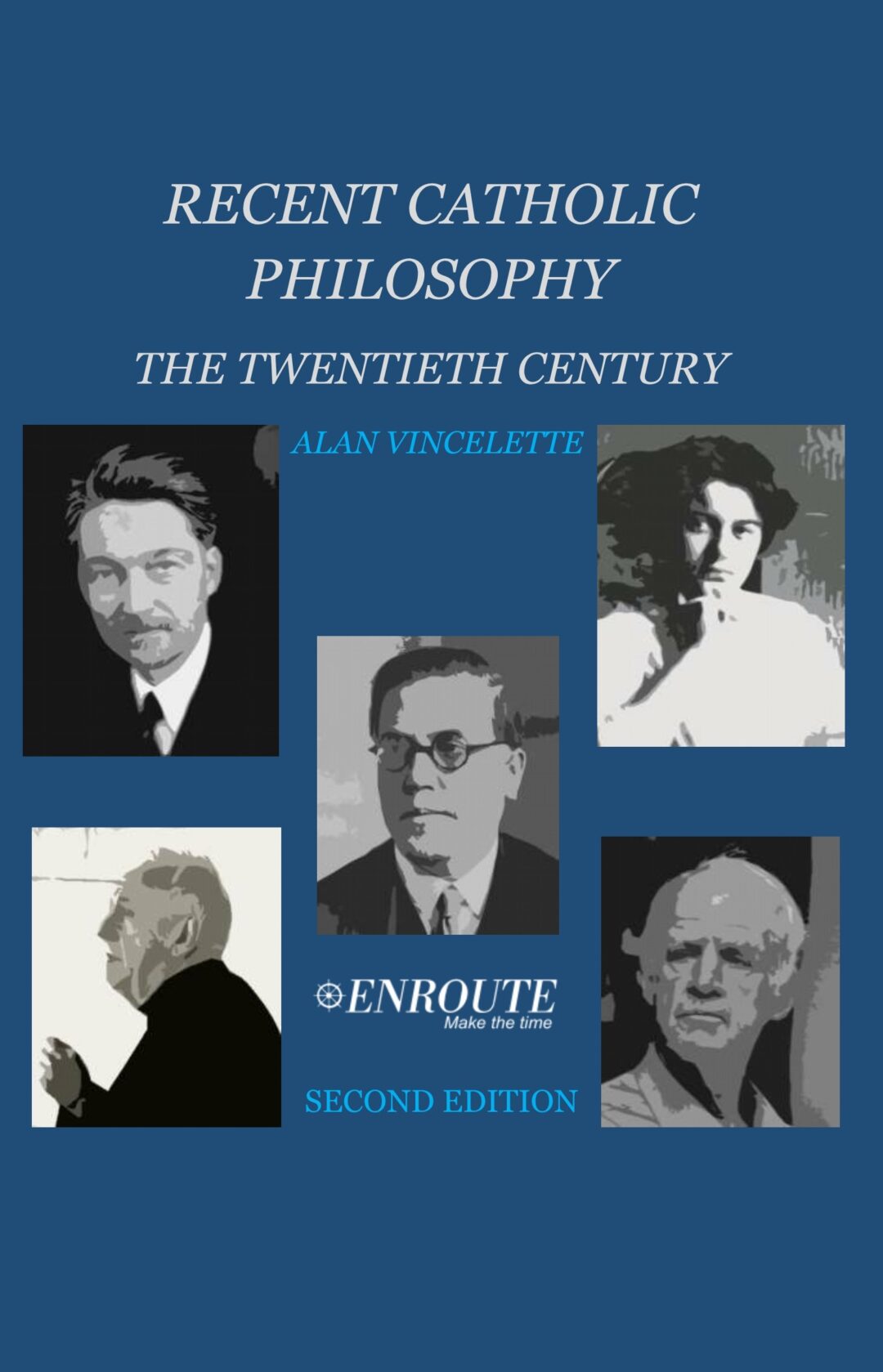
Recent Catholic Philosophy
The Twentieth Century
This presentation of Catholic philosophy in the twentieth-century reveals a remarkable diversity of views. Dr. Vincelette presents this diversity in an expository manner without applying the kind of interpretive framework that is often used in critical commentaries to shape the reader’s judgment inside of a particular paradigm. This is Catholic thought expressed in its finest way, raw and unsaturated, across the intellectual fabric of forty-two important philosophers whose thought has shaped our current century.
Chapter 1: Phenomenology
Max Scheler (1874-1928)
Dietrich Von Hildebrand (1889-1977)
Edith Stein (1891-1942)
Henry Duméry (1920-2012)
Michel Henry (1922-2002)
Enrique Dussel (1934- )
Emmanuel Falque (1963- )
Chapter 2: Neo-Thomism
Réginald Garrigou-Lagrange (1877-1964)
Étienne Gilson (1884-1978)
Jacques Maritain (1882-1973)
Karol Wojtyła [John Paul II] (1920-2005)
John Haldane (1954- )
3. Transcendental Thomism
Pierre Rousselot (1878-1915)
Joseph Maréchal (1878-1944)
Henri De Lubac (1896-1991)
Karl Rahner (1904-1984)
Bernard Lonergan (1904-1984)
4. Personalism
Ferdinand Ebner (1882-1931)
Emmanuel Mounier (1905-1950)
Maurice-Gustave Nédoncelle (1905-1976)
Robert Spaemann (1927-2018)
John Crosby (1944- )
5. Existentialism
Louis Lavelle (1883-1951)
Gabriel Marcel (1889-1973)
Xavier Zubiri y Apalátegui (1898-1983)
Leonardo Polo (1926-2013)
Ferdinand Ulrich (1931- )
6. Analytical Philosophy
Peter Geach (1916-2013)
Gertrude Elizabeth Margaret Anscombe (1919-2001)
Michael Dummett (1925-2011)
Nicholas Rescher (1928- )
Alasdair MacIntyre (1929- )
Charles Margrave Taylor (1931- )
Francis Jacques (1934- )
Bas Van Fraassen (1941- )
7. Postmodernism
Michel De Certeau (1925-1986)
John Caputo (1940- )
Jean-Luc Marion (1946- )
Jean-Yves Lacoste (1953- )
William Desmond (1951- )
Richard Kearney (1954- )
Claude Romano (1967- )
About the Author
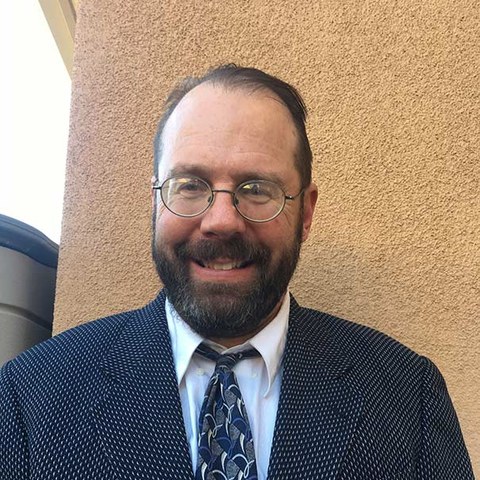
Dr. Alan Vincelette is the Wilfred L. and Mary Jane Von der Ahe Chair of Philosophy at St. John’s Seminary in Camarillo, California. In addition, he serves as an Adjunct Professor of Philosophy at Holy Apostles College and Seminary in Cromwell, Connecticut.
Dr. Vincelette specializes in ethics and the philosophy of love as well as the history of Catholic philosophy, having written on such topics for the New Catholic Encyclopedia, the Continuum Encyclopedia of British Philosophy, and the Bloomsbury Encyclopedia of Philosophers, among other works, and he continues to teach in these areas for seminarians and laity of the Archdiocese of Los Angeles, the Diocese of Norwich, and nearby dioceses.
Reviews
- Recent Catholic Philosophy:
- The Twentieth Century
- by Alan Vincelette
- En Route Books & Media
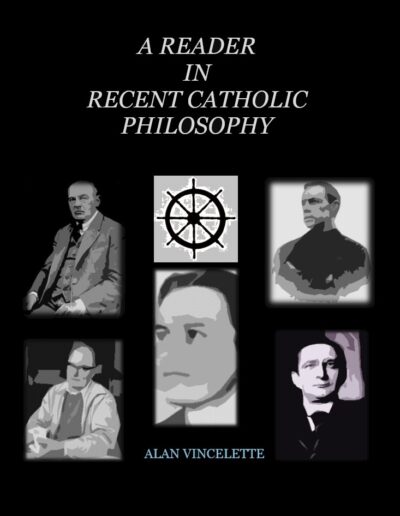
- What a wonderful resource this turned out to be, along with Dr. Vincelette’s accompanying work A Reader in Recent Catholic Philosophy. For the purposes of this review I will look at some of my own personal favourite recent Catholic philosophers.
- To begin with, Dr. Dietrich Von Hildebrand. Humanly speaking, I owe him so much. I read his books in the eighties and it made so much sense, especially with regard to the current crisis in the Church. Some might accuse him of an undue pessimism. I think he was right in his analysis. He is surely one of the great defenders of the Catholic Faith in our age. His book Ethics is an attack on moral relativism. Dr. Vincelette notes that the phenomenology adopted by Von Hildebrand is a suitable means to demonstrate the error of relativism, as phenomenology rejects any explanation which fails to do justice to our experiences. We are not limited by the senses as we can also reflect on mental experience. To claim that only what is physically experienced by the senses, as Hume and the Positivists do, is to limit what we mean by experience.
- For Von Hildebrand, something has value independent of our need for pleasure. To delight in a value is a sort of added extra. A value has intrinsic goodness. It calls us to transcend self-centeredness. Our response to value means being called to reverently submit to something greater than ourselves. We are obliged to give it an adequate response, to do good and avoid evil. Thus morality comes to a fundamental choice which is above the subjectively satisfying. Von Hildebrand is thus a moral realist.
- I had the privilege of listening to Peter Geach a few years before he died. When I asked him a question after his talk, he responded by quoting from Dr. Faustus! He was one of the earliest Catholic analytical philosophers. He challenged the views of many of his predecessors, including Bertrand Russell. It was Geach who invented the problem of the “stuck potholer.” Is it wrong to intentionally kill a rotund individual blocking the entrance to a cave in order to save other lives? Yes, it is. Geach also wrote a philosophical explanation of why God does not change in himself when he hears our prayers and acts accordingly.
- Geach was married to Elizabeth Anscombe, one of the most outstanding philosophers of the twentieth century. I attended some of her lectures in the eighties, when she was suitably attired in a manly suit. She was a student of Wittgenstein and his literary executer. She was a courageous defender of the unborn. Her great work Modern Moral Philosophy helped to launch contemporary virtue ethics. Dr. Vincelette notes that the work is often misunderstood by those who claim it rejects natural law theory. Actually, she argues that if you reject the existence of God, you should also give up on concepts like moral obligation. The main problem with modern moral philosophy, according to Anscombe, is in its embrace of a utilitarian point of view that rejects the principle of intrinsically evil acts.
- Etienne Gilson was an outstanding historian of philosophy in the Thomist tradition, although he did not consider himself a Neo-Thomist. He was critical of the subjectivism of Descartes. If we proceed from thought to the world, we are unable to avoid being trapped in our own minds. We must begin with being. There is no need to make the existence of the world a postulate that needs to be proven. The realist knows.
- Like Anscombe, Alasdair MacIntyre is highly critical of modern moral philosophy as it has focused on utility. Morality must return to the Aristotelian idea of virtue. True virtue requires acting for the sake of a genuine human end. Such a virtue-based ethic requires being situated in a social setting and in a narrative tradition.
- Dr. Vincelette has given us a splendid overview of some of the great recent Catholic philosophers. A work to return to again and again.
- – Pravin Thevathasan, Editor, Catholic Medical Quarterly