Prices as listed by En Route.
The retailer’s price may differ.
Bookstores, parishes, and schools:
Order direct at a discount.
- Subject
- Practical Theology
- Series
- The Art of Accompaniment
- Reading lists
- The Seminary Bookshelf
- Formats
- Paperback, Kindle, Audible, Free PDF
- Publisher
- En Route Books and Media
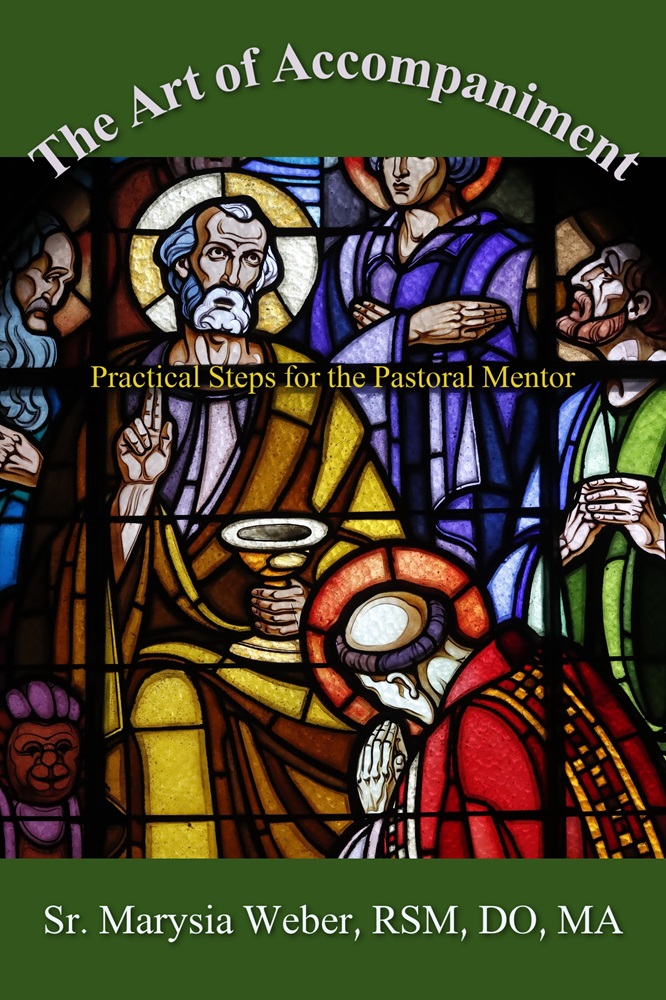
The Art of Accompaniment
Practical Steps for the Pastoral Mentor
This book presents an integral approach to formation during the vocational synthesis stage, weaving together the human, spiritual, intellectual, and pastoral dimensions of priestly preparation. It is responsive to the Church’s vision articulated in Pastores Dabo Vobis, Ratio Fundamentalis, and the Program of Priestly Formation (6th edition), offering formators a comprehensive framework for accompanying transitional deacons in their final preparation for priesthood. By providing formators with both a synthetic vision of integral formation and practical tools for implementation, it enables mentors to accompany transitional deacons through the vital process of vocational synthesis, helping them integrate their years of formation into a coherent priestly identity. May this work be for God’s glory and the good of His devoted servants.
Praise
“This edition of The Art of Accompaniment arrives at a critical moment in the Church’s ongoing renewal of priestly formation. As we implement the vision of the new Ratio Fundamentalis and Program of Priestly Formation (6th edition), formators need both theological depth and practical guidance. Sister Marysia provides a framework that integrates the four dimensions of formation while remaining deeply practical.”
“The art of accompaniment finds its deepest expression in the vocational synthesis stage, where formators are called to guide transitional deacons in becoming shepherds with the smell of the sheep, who are deeply in love with Christ and ready to bring His mercy to His people. Sister Marysia’s work beautifully captures this vision, showing how genuine accompaniment flows from the formator’s own intimate relationship with Christ and commitment to ongoing conversion. Her emphasis on affective maturity as the foundation for authentic pastoral relationships speaks directly to our mission of forming missionary disciples. Drawing especially from Pastores Dabo Vobis, the Ratio Fundamentalis, and Program for Priestly Formation (6th ed.), this work provides formators with both the theological framework and practical tools needed for authentic accompaniment. Having served in seminary formation for many years, I particularly appreciate how Sister Marysia emphasizes the parish as a vital community of formation where pastoral mentors and staff collaborate in forming priests who can serve effectively in our contemporary world. This book will prove invaluable for those entrusted with forming shepherds after the Heart of Christ.”
“In the Gospel of John, we witness St. Andrew’s profound example of leading others to Christ – a model of missionary discipleship that resonates deeply with the vision presented in this edition of The Art of Accompaniment. This masterful work illuminates the sacred journey of vocational synthesis, where the pastoral mentor, like Andrew, helps transitional deacons integrate their friendship with Christ into authentic pastoral charity. Sister Marysia has crafted an invaluable resource that beautifully reflects the Church’s program of formation while offering practical guidance for those charged with forming tomorrow’s priests. The book’s emphasis on integral formation and affective maturity provides concrete tools for helping candidates discover and embrace their priestly identity as spiritual husbands and fathers who will, in turn, lead others to friendship with God.”
“In his great work The Wellspring of Worship, the theologian Fr. Jean Corbon teaches us “that the most fruitful human activity is to receive God.” In her contemporary masterpiece The Art of Accompaniment, Sr. Marysia Weber, R.S.M., shows us how to cultivate and strengthen our abilities and a heartfelt readiness to be more receptive to the transforming power of Jesus’ Spirit. Evangelization in the parish and beyond is made immensely fruitful by appropriating their wisdom.”
About the Author
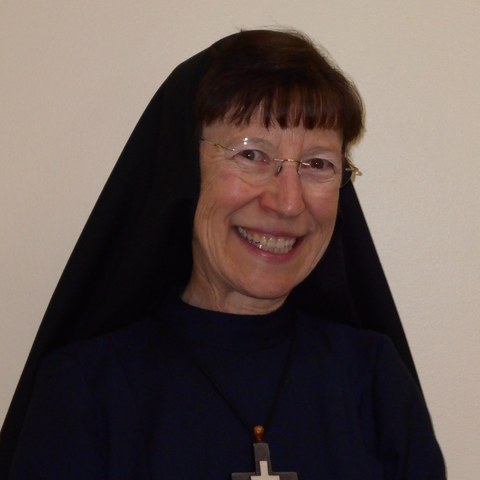
Sister Marysia Weber is a Religious Sister of Mercy of Alma, MI. She is a physician, certified by the American Board of Psychiatry and Neurology. She completed her residency and fellowship at the Mayo Clinic in Rochester, MN. She received the Howard P. Rome, MD Writing and Clinical Research Award- Mayo Clinic, Department of Psychiatry and Psychology. She holds a master’s degree in theology from Notre Dame, South Bend, Indiana. She practiced psychiatry at her religious institute’s multidisciplinary medical clinic, Sacred Heart Mercy Health Care Center in Alma, MI from 1988-2014. She has served as a psychological expert consultant for the Secretariat of Clergy, Consecrated Life and Vocations, USCCB and the Ad Hoc Sexual Abuse Committee. She became the Director of the Office of Consecrated Life for the Archdiocese of Saint Louis in 2014. She served as facilitator for Rachel’s Vineyard, and as an executive board member of the Saint Louis Guild Catholic Medical Association. She served on the Archdiocesan Pastoral Council, Review Board and Safe Environment Board. She also served as Clinical Instructor in the Department of Psychiatry at Washington University School of Medicine in Saint Louis, Missouri. She continues her work as chair of the board of directors of MyCatholicDoctor and with the Seminary Formation Council forming seminary formators and pastoral mentors in the Art of Accompaniment. She was recently missioned to Tulsa, OK and serves as vice president of mission and ministry and co-chair of the ethics committee for San Francis Health System.
Dr. Weber offers workshops on a variety of topics including human attachment, boundaries and character development, depression and anxiety, dialogue and conflict resolution, as well as on social media and its effects on the brain for clergy, seminarians, women’s and men’s religious communities, parents, teachers and students. She presents on Internet pornography addiction—a Catholic approach to treatment to bishops, clergy, seminarians, religious communities, and laity throughout the United States and Europe. She presented to the U.S. Bishops in Dallas TX in 1992 on “Pedophilia and Other Addictions”. She was a member of the USCCB Ad Hoc Committee on Sexual Abuse in 1994-1995. Dr. Weber has presented to the Curia, Vatican City State on “Sexual Abuse of Minors by Clergy in North America” in 2002.
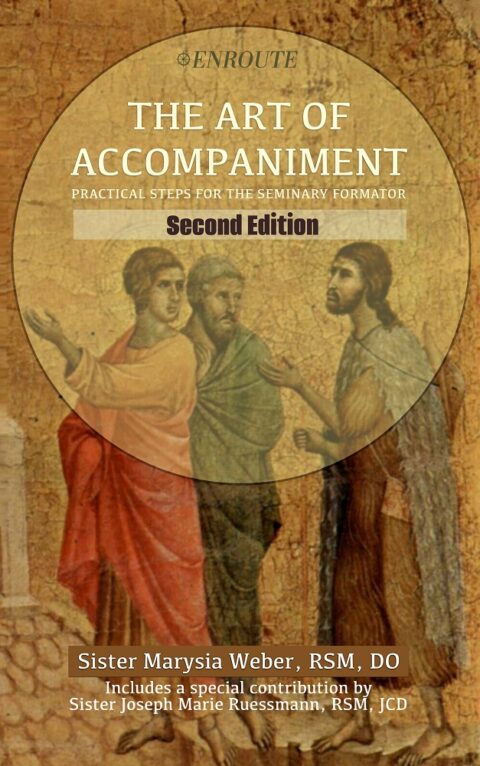
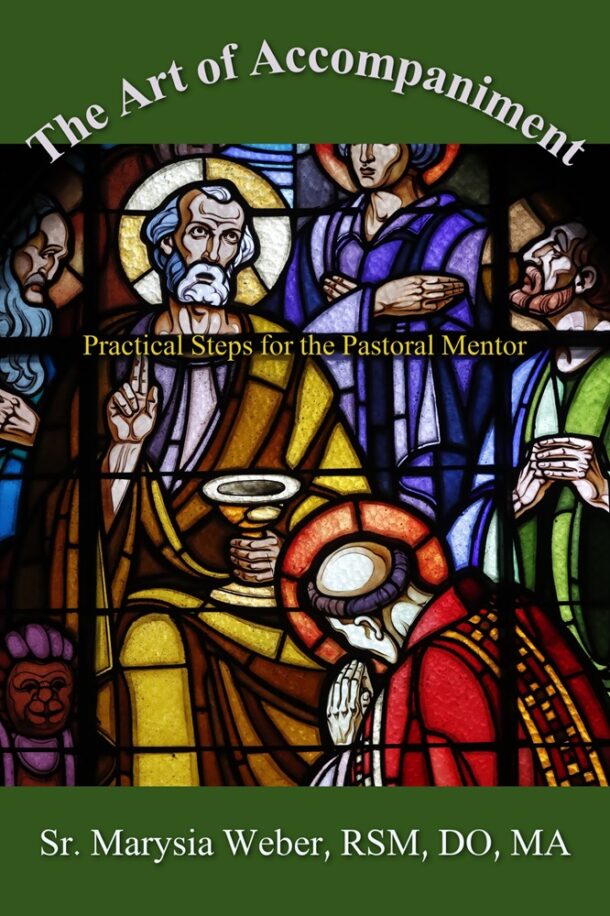
Dr. Weber’s publications include: The Art of Accompaniment: Practical Steps for the Pastoral Mentor offering formators a comprehensive framework for accompanying transitional deacons in their final preparation for priesthood (https://enroutebooksandmedia.com/practicalsteps/). She published a second edition of her book: The Art of Accompaniment: Practical Steps for the Seminary Formator which incorporates aspects of the transformational focus of the Program for Priestly Formation, 6th edition (https://enroutebooksandmedia.com/artofaccompaniment/).
Her book Screen Addiction: Why You Can’t Put that Phone Down, now also available in Spanish (https://enroutebooksandmedia.com/screenaddiction/) describes how excess screen time alters the brain and offers many practicals to address these effects. She also has two chapters in Spiritual Husband-Spiritual Fathers: Priestly Formation for the 21st Century including: “Guideposts for the Seminary Formator in Understanding and Assessing Levels of Preoccupation with Use of Internet Pornography and a Formative Process for Moving from Vice to Virtue” https://enroutebooksandmedia.com/spiritualhusbands/).
Her other publications include “Medical Aspects of Addiction”; “The Roman Catholic Church and the Sexual Abuse of Minors by Priests and Religious in the United States and Canada: What Have We Learned? Where Are We Going?”; “Pornography, Electronic Media and Priestly Formation” in Homiletic and Pastoral Review. Her publications in Seminary Journal include: “Significant Markers of Human Maturation Applied to the Selection and Formation of Seminarians”; “The Discernment of a Priestly Vocation and the Expertise of Psychiatry and Psychology”; and “Internet Pornography and Priestly Formation: Medium and Content Collide with the Human Brain”.
Watch and Listen
Table of Contents
Chapter 1 introduces the vocational synthesis stage of priestly formation, focusing on the role of the parish pastor as the primary formator (mentor) of transitional deacons. It examines the nature of the formative relationship between mentor and deacon, particularly addressing the crucial distinction between internal and external forum communication. The chapter emphasizes that while respecting the internal forum’s sanctity, meaningful formation requires appropriate transparency and trust in the external forum, allowing mentors to effectively evaluate a deacon’s readiness for priesthood.
Chapter 2 provides a framework for pastoral mentorship in the vocational synthesis stage, focusing on the practical and spiritual aspects of accompanying transitional deacons. Drawing from Church documents and Jesus’s model of formation, it outlines specific guidance for mentors on creating effective formation environments, establishing relationships, and coordinating with parish staff. The chapter bridges theoretical understanding with practical implementation, offering detailed instructions for day-to-day mentoring while maintaining focus on the ultimate goal of preparing deacons for priesthood.
Chapter 3 provides a framework for effective formative dialogue between mentors and transitional deacons. It explores six essential communication skills: reflective listening, open-ended questions, mirroring, summarizing responses, empathy, and affirmation. The chapter addresses the psychological dynamics of ambivalence and resistance in formation meetings and concludes with a detailed practical scenario demonstrating the application of these skills in a realistic mentoring situation.
Chapter 4 examines the crucial dynamics of transference and countertransference in the context of priestly formation and ministry. It distinguishes between therapeutic and pastoral relationships, explores the unique challenges of dual relationships in parish ministry, and provides practical guidelines for managing these psychological dynamics. The chapter emphasizes the distinct nature of priestly ministry compared to therapeutic relationships, particularly focusing on how priests must navigate multiple roles while maintaining appropriate boundaries in pastoral relationships.
Chapter 5 examines the crucial concept of affective maturity in priestly formation, particularly during the vocational synthesis stage. It builds on Saint John Paul II’s theological anthropology, especially his work on Person and Act, to explain how affective maturity develops through the integration of emotions, cognition, and willed actions. The chapter presents a comprehensive framework for understanding affective maturity’s development through three stages: self-knowledge, self-possession, and self-gift.
Chapter 6 presents the Church’s benchmarks for evaluating process in formation, offering these not merely as assessment tools but as living markers embodying the Church’s understanding of formation as a unified journey of discipleship toward priesthood. A template is also provided for the mentor’s use when ready to offer a narrative summary of each transitional deacon’s integration of formation.